Airing
In the open air.
Released July 31st, 2024
3 minutes, color, silent, super-8mm (18 fps)
Shot on a Sankyo MF-303 Macro Focus on Super 8mm Kodak VISION3 200T Color Negative Film 7213 at 18 fps
Released in 1536×1152 resolution at 18 fps, also blown-up to 16mm
1.33:1
With Erin Carter
Screenings:
August 7th, 2025
Unnameable Books, 16mm
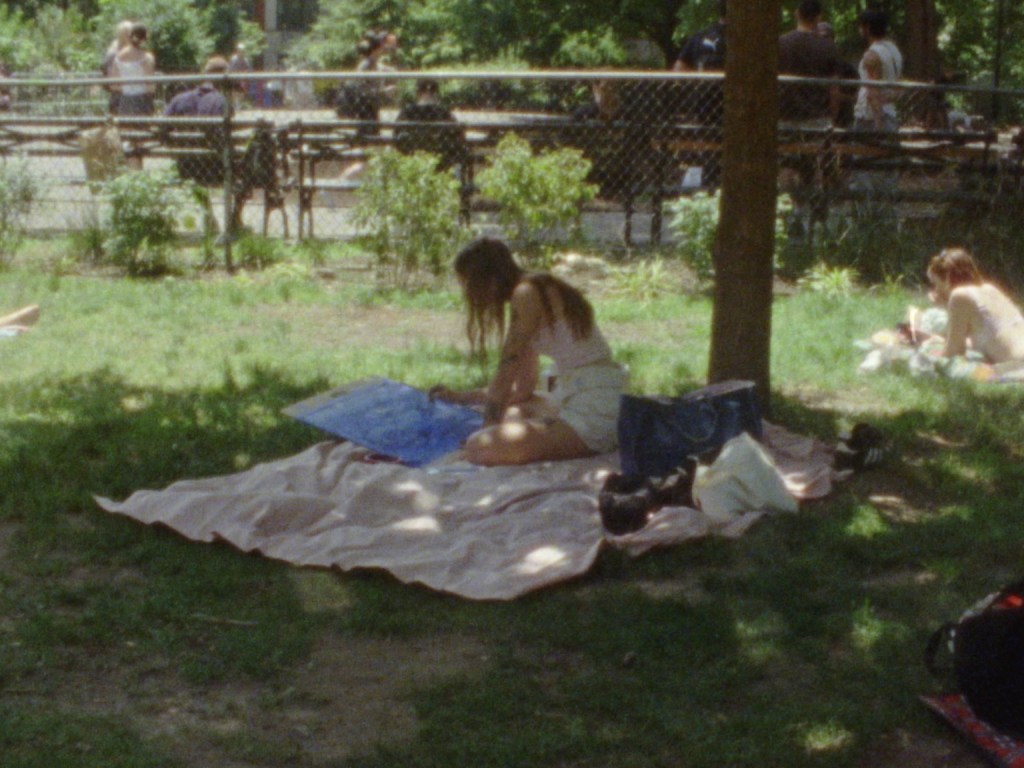
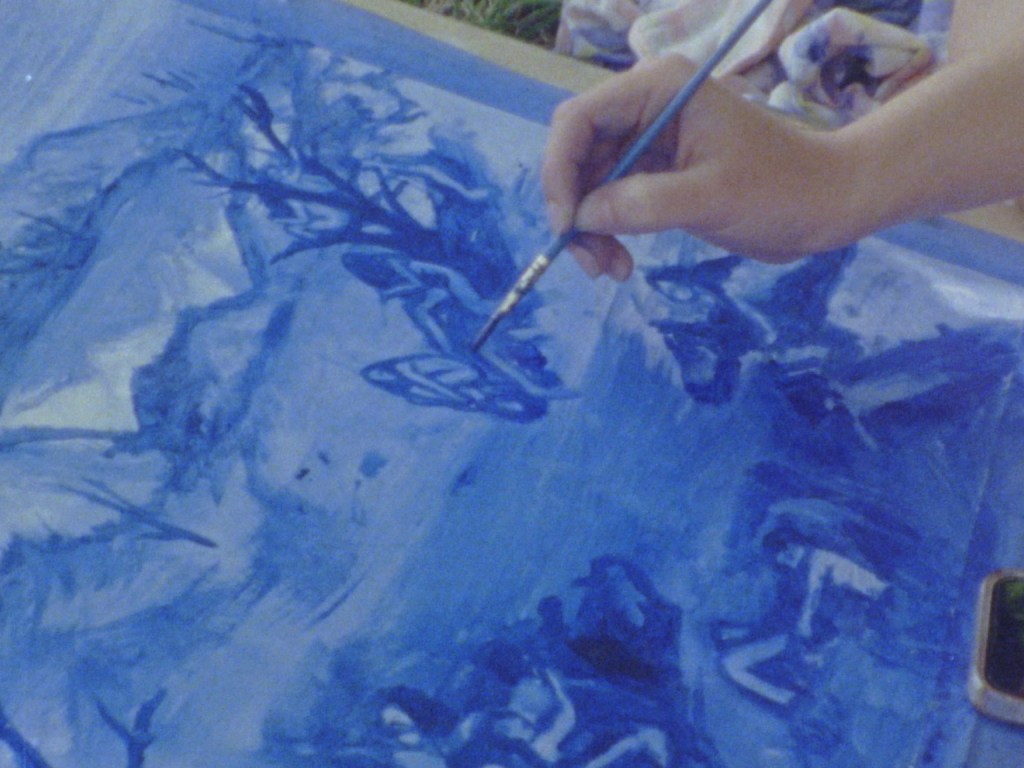
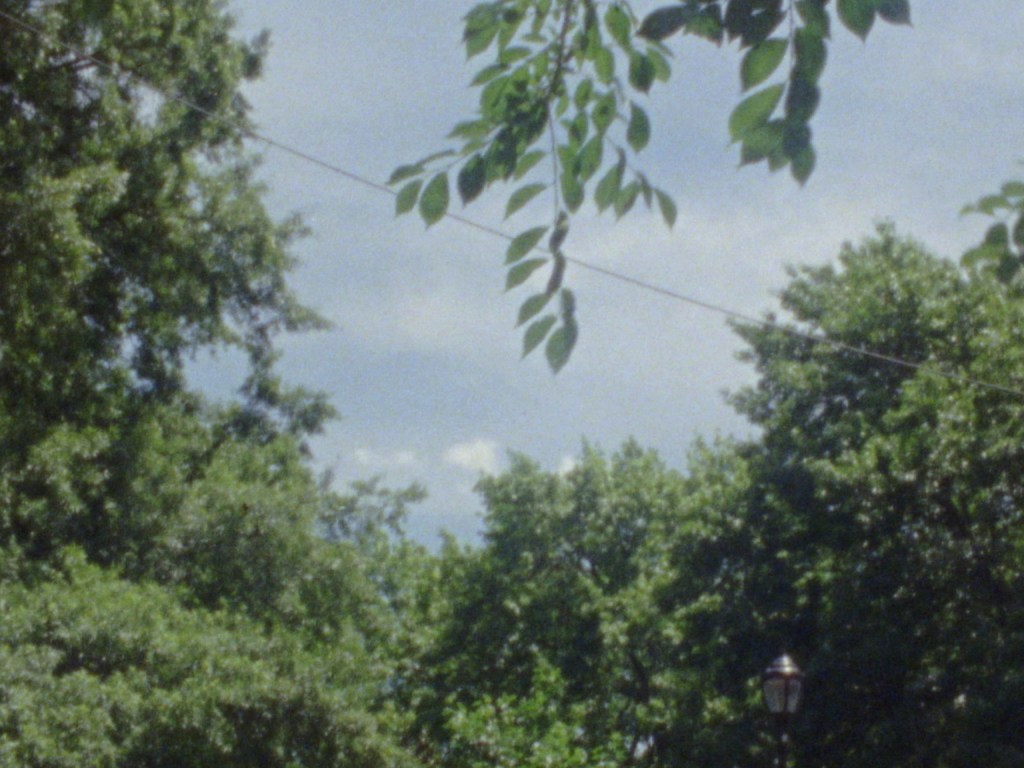
“Carter Haskins’ short silent film Airing is an urban pastorale, a genre that inherently carries a degree of irony. While the film evokes a scene reminiscent of the 19th century, it is subtly infused with modern, subversive elements. Shot on Super 8 film, its grainy texture makes the air itself feel tangible—atoms bumping and rubbing against each other. At the film’s center is a young woman seated on a blanket in a busy city park, drawing on a large piece of paper. Having recently watched several Jane Austen adaptations, I was reminded that outdoor watercolor painting was once one of the few respectable pastimes available to women. However, unlike Austen’s heroines—spirited though they may be—Haskins’ subject wears visible tattoos, a nose ring, and casually bares more skin than would ever have been deemed appropriate in polite society. Traditionally, such overt expressions of female sexuality are frowned upon in bourgeois culture. Yet, paradoxically, the idealized female nude has long been acceptable as an object for the artist’s gaze. The woman in Airing, however, appears indifferent to how her appearance might be interpreted. She asserts control over her body and presence, undisturbed by those around her. Upon closer inspection, we realize that the picture she’s painting isn’t a rendering of her immediate surroundings, but rather an imagined pastoral scene populated with nude figures in various poses—a nod to a long bohemian tradition in representational art. The camera then cuts upward to the sky, framed by tree branches rustling in a gentle breeze. It is a timeless image, disrupted only by the stark line of a telephone wire cutting across the frame. As a silent film, Airing self-consciously connects us to the early history of cinema. But it also gestures toward the broader history of visual art. While most early silent films were accompanied by live music or sound effects, other forms of visual art—such as painting and sculpture—are experienced in silence. This quietude hints at the film’s aspiration to be accepted as fine art, an aspiration it fulfills.
Just as it yearns for a return to nature, Airing also yearns for a place within the canon of artistic expression.”
– Peter von Ziegesar
 Carter Haskins